
The fear of making an idiot out of yourself is the biggest turn-off for most skiers. By making sure you’re at your peak fitness, you can make sure you make the most out of your skiing holiday, instead of finding that you are too physically exhausted to get out of bed four days into your trip. Even if you’re a skiing beginner, doing the same manoeuvres over and over again for six or seven hours a day at high altitude for an entire week can be exhausting. The only way to make sure you have the energy – both physical and mental – to fully enjoy the experience is to get in shape long before you hit the slopes.
You don’t have to be at professional athlete standard before you go on your holiday, but the fitter your body is, the less the chance of injury. For this, make sure you include stamina and endurance training, strength and flexibility and ski-specific exercises into your workout routine before you go.
One of the best things about skiing and snowboarding is that you can alter the level of ability with experience and/or training, which makes the sports so unique and interesting.
When you first arrive at your resort, you’ll be eager to start right away and see how many of the runs you can tackle. However, bear in mind that a slow advancement of the slopes is the best way to explore safely. Trying to tackle a run which is too steep or too difficult for you when you aren’t ready or experienced enough to handle it can be dangerous.
Ski runs are categorised into different colours based on their difficulty. In both Europe and America, green is used to designate learner slopes which have a lesser gradient and are appropriate for those who are just starting out. These are also good to practice techniques if you’re not yet confident enough for a steeper slope. Make sure you move on from the green slopes pretty quickly though, it can get boring and not challenging yourself with the next level can leave you not developing your skill. Blue slopes are the next level, and are usually suitable for beginners and lower intermediates. Red slopes only exist in Europe and are for the upper intermediates, but the American equivalent is the black run (which can be confusing for European skiers as the black runs in Europe mean ‘expert’ level). The equivalent of a European black run is marked as a double black run in America, and orange and yellow runs are for the more advanced and expert level skiers.
Runs aren’t always marked on their gradient, but also the variety of challenges and difficulties that skiers have to face whilst on the slope. Mogul fields occur regularly on some slopes. Moguls are a series of bumps formed on a trail from the skiers pushing the snow into mounds or piles as they execute short-radius turns. Navigating through moguls is the mark of a skiers control and can be really tricky. Narrower runs also require you to employ different skills, with slopes that pass through dense forests offer a different perspective and experience to those that are located on mountain faces, which are more exposed.
Weather conditions also play a huge part in the experience of a run or slope. The difficulty of a run can be altered depending on the weather. Slopes that are very exposed are likely to become icy and more dangerous when the winds pick up and blow the powder snow away. Alternatively, forest trails tend to be more sheltered and will therefore be a lot softer as they are guarded from the strong winds.
There are a huge range of resorts and piste types to choose from whilst you’re thinking ahead and planning your winter sports holiday. Ideally, you need to be able to decide what type of winter sports holiday you need and whether the resorts you’re looking at will suit you.
Where?
European ski resorts are famed for their beautiful chalets and great atmosphere, and with several of them spread across the sprawling and highly-rated Alps mountain range, you have plenty to choose from – over 41 countries with multiple ski resorts in each. Europe obviously also offers the convenience and comfort of being closer to home which can be better if you have a younger family, as travelling with children for longer periods of time, like a trip to America, can be difficult as they become tired and bored quickly.
American ski resorts are admired worldwide for their world-class skiing and snowboarding quality. Top instructors can teach you if you’re inexperienced and there is a huge variety of runs no matter what your ability. With over 427 resorts in the US alone, it can be well worth the extra expense for a visit you’re not likely to forget.
How much?
Knowing how much you’re willing to spend on your holiday, how much you can afford and how much you can get for your money are also really important things to think about whilst browsing for a winter sports holiday.
All ski resorts know they can vary their prices throughout the year dependent on peak, off-peak and quality snow seasons. Almost all of them will hike up their prices during peak seasons, so you can save a lot of money by booking around these times. Pay attention to the weather predictions as if you’re booking at the bottom of off-peak season, you’ll want to make sure the snow is still good, or even still there!
Booking as a group is a great way to get discounted prices, and it’s usually a case of the more the merrier! Accommodation is particularly cheap when you book as a group, as you can usually book a larger chalet and it’ll cost less per head than separate smaller chalets or individual hotel rooms. Self-catering is a good option if you want to keep the cost down too.
Looking at chalets and packages outside of the usual European and American resort clusters is a good idea too. Places such as Eastern Europe; Bulgaria, Poland and Slovakia all offer cheaper and alternative destinations for a good and usually affordable price.
What’s your skill level?
Going on a winter sports holiday and hitting the slopes feeling unsteady and very uneasy can be really overwhelming, and you won’t be able to learn properly on an advanced or even intermediate slope as it’s important you grasp the basics of what you’re doing, but also that you make sure you’re doing it safely. Look for resorts with nursery or beginner slopes, you may even be able to join the schools there and learn within a larger group, or alternatively hire out a private instructor.
If you’ve done this all before, then just make sure the resorts you’re looking at have enough variety of slopes and that there are a few more slopes that are challenging enough for you to conquer. A sense of achievement really adds to the holiday.
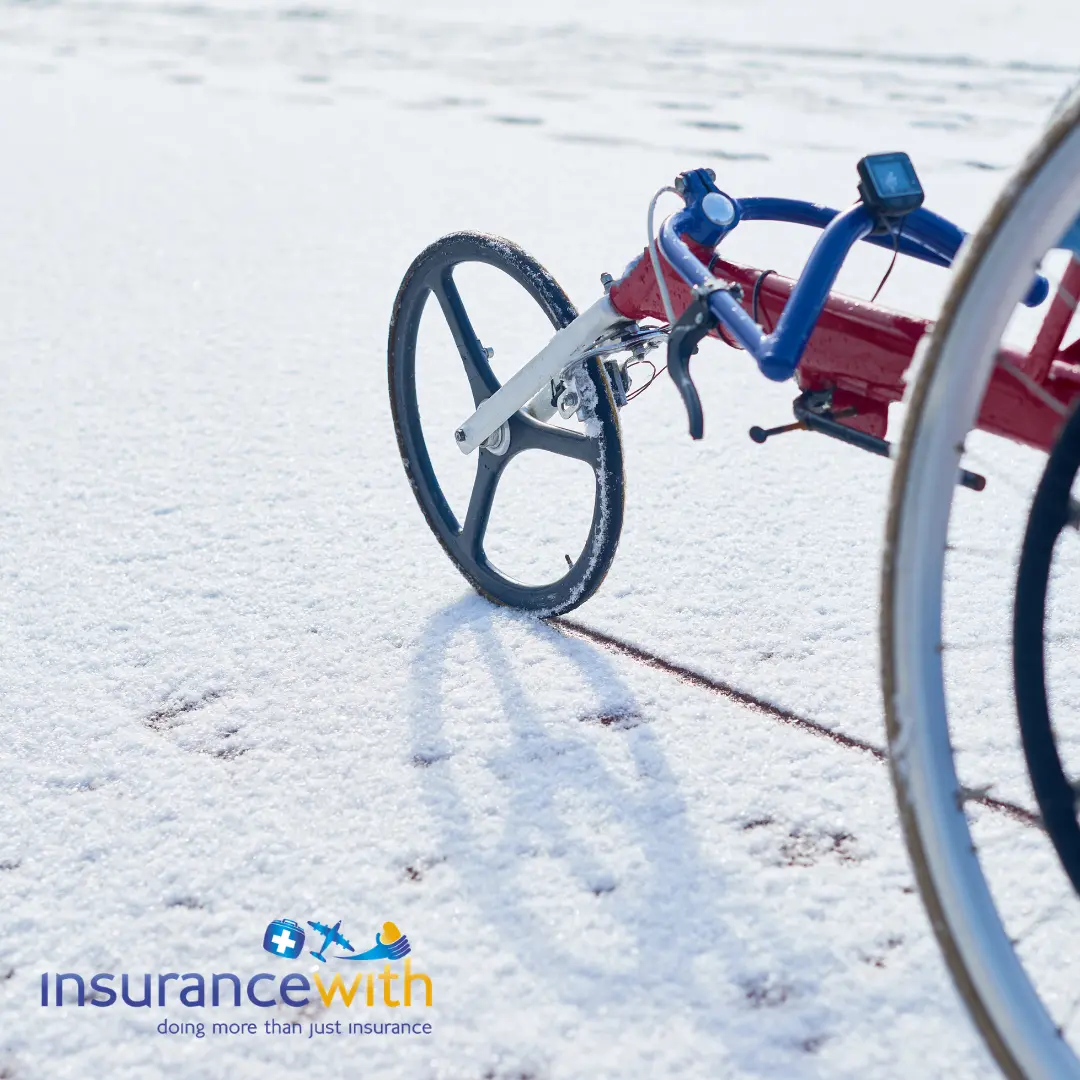
The 2014 Sochi Winter Paralympics made us all more aware of the growing number of winter sports for disabled people. They also highlighted the opportunities available to people with varying disabilities.
The games showed that there truly is no limit to what the human body can achieve. This is especially true when taking part in intense sports on snow or ice.
Exploring vast, snow-covered scenery can be hugely challenging for people with disabilities. Safety and stability should always come first.
However, with determination and a little innovation, many challenges can be overcome. This can help people with disabilities enjoy the same winter sports fun as everyone else on the piste. So what’s available?
Depending on your disability and your requirements, there are several variations on the standard ski. For example, the dual-ski pilot involves sitting on an articulated seat above two short skis. A pilot then pushes and directs you down the run. They don’t have to be specially trained, but they should be a confident skier.
The Kartski is another alternative, offering skiers the opportunity to ski independently with the use of their upper arms but do not have enough balance for skiing. The skier sits on a harnessed seat and steers the Kartski with handles on each side for navigation and braking.
The Uniski and Dualski are also both different variations on the sit-ski, and are similar to the pilot and the Kartski. As the names would suggest, the Uniski only have one ski, whereas the Dualski has two, and the skier uses ski poles to gain speed and change direction.
Adaptive snowboarding refers to a modified version of the original snowboarding sport, with changes in rules, equipment and some technical specifications which allow people with physical disabilities to participate in both recreational and competitive snowboarding. It involves an ‘outrigger’, a board with a handle attached for balance, and sometimes a pilot, but the adaptive snowboarding equipment depends entirely on the ingenuity and creativity of the specialist instructors at the resort, many who customise their own equipment in order to provide for those with disabilities.Appropriate equipment is ability-oriented and based on whether a student has sufficient balance and strength to ride vertically.
A previously paralysed hand has been made to grip objects again in a breakthrough from scientists at the University of Newcastle.
A research team from the university experimented on monkeys whose hands were paralysed, are were able to use ‘the power of thought’ to enable the animals to move their hands again. Read more